Complex Product Inventory
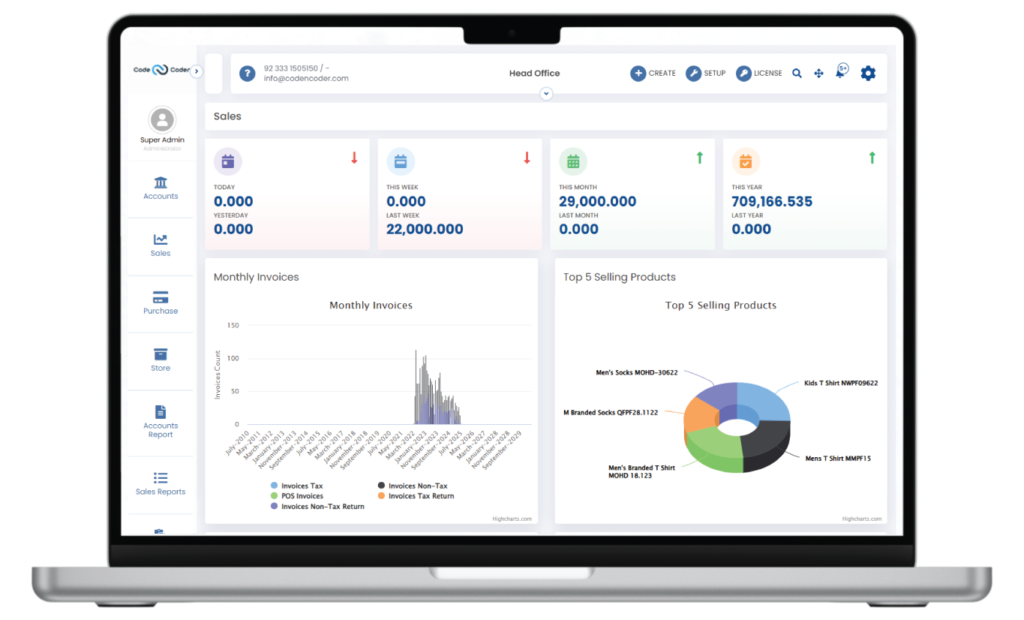
Garment businesses need to manage many apparel items, including different T-shirts, socks, branded products, and stock categories..

The Garment Management ERP is a centralized platform designed for apparel retailers, wholesalers, distributors, and light-manufacturing businesses. It supports garment products such as kids’ T-shirts, men’s T-shirts, branded apparel, and socks through connected business workflows..
The system brings together product purchasing, stock management, sales orders, delivery challans, invoicing, POS, customer and supplier payments, production, and financial reporting in one operational workspace..
Garment operations needed to become more accurate, connected, and easier to manage across stock, sales, purchasing, and finance.
Garment businesses need to manage many apparel items, including different T-shirts, socks, branded products, and stock categories..
Purchases, store transfers, delivery challans, stock adjustments, and returns need accurate tracking to avoid inventory issues..
Teams need a clear process for quotations, sales orders, POS sales, deliveries, invoices, returns, and payment receipts..
Businesses involved in garment production need to manage material issues, Bill of Material, production notes, and assembly processes..
Without a connected garment-management system:
Manual stock records can cause inaccurate garment balances, missing items, and incorrect product availability.
Without clear sales-order, delivery, and invoice workflows, customer orders can be delayed or managed incorrectly.
Businesses may struggle to track customer balances, supplier payments, expenses, revenues, and product profitability.
Without material-consumption and production tracking, businesses may find it difficult to control garment-production costs.
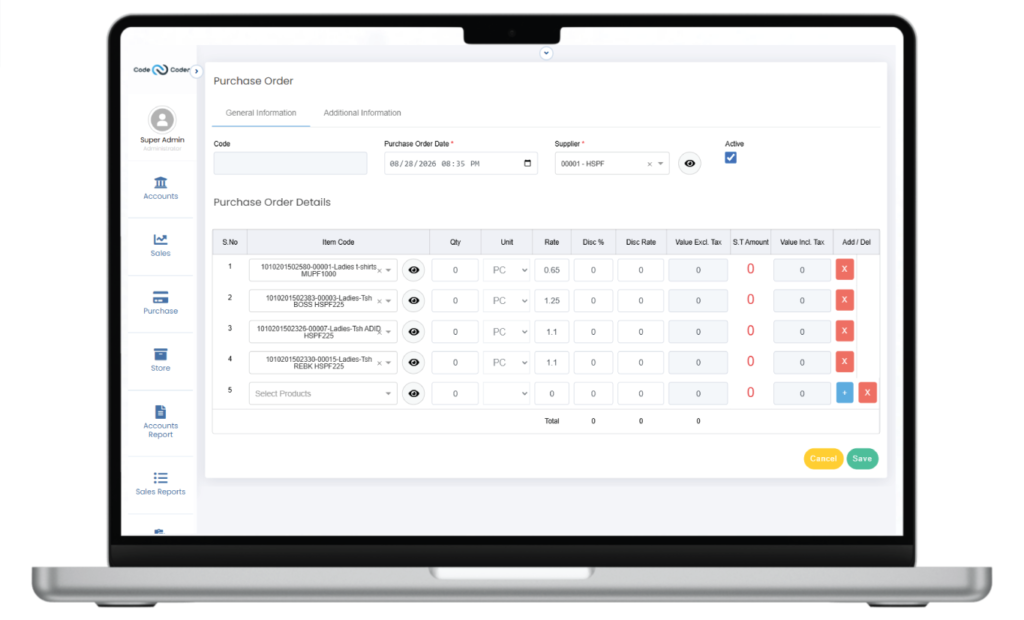
The ERP created a centralized garment-management system designed to connect inventory, sales, purchasing, production, and accounts.
The platform provides garment businesses with one connected system for managing stock, sales, production, purchasing, and finance.
Teams can track apparel stock, inventory adjustments, transfers, reorder quantities, and product movement more accurately..
Sales orders, delivery challans, invoices, POS transactions, returns, and payments follow a structured workflow..
Material issues, Bill of Material, production notes, assembly, and material-consumption reports support better production control..
Dashboards and reports provide visibility into sales, stock, customers, suppliers, receivables, payables, expenses, and profitability..
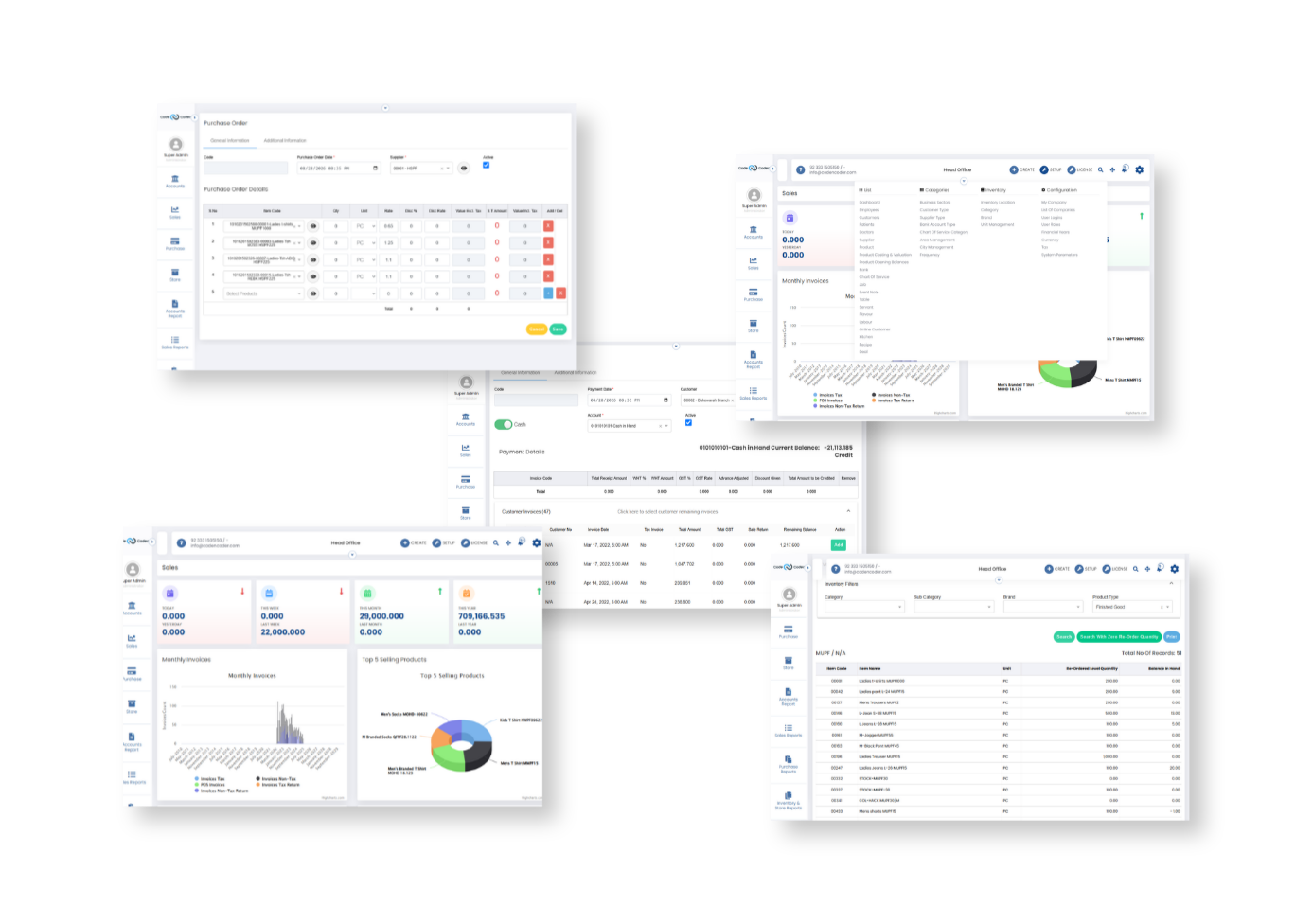
The solution created a stronger foundation for reliable operations, customer experience, and sustainable growth.
Streamlined customer and team workflows
Connected platform experience
Protected data and access controls
Architecture ready for future growth
Stable integrations and operations
Reusable foundation for new features